

 Apple Podcasts

 Spotify

 YouTube
Bob Bonnio - DWD
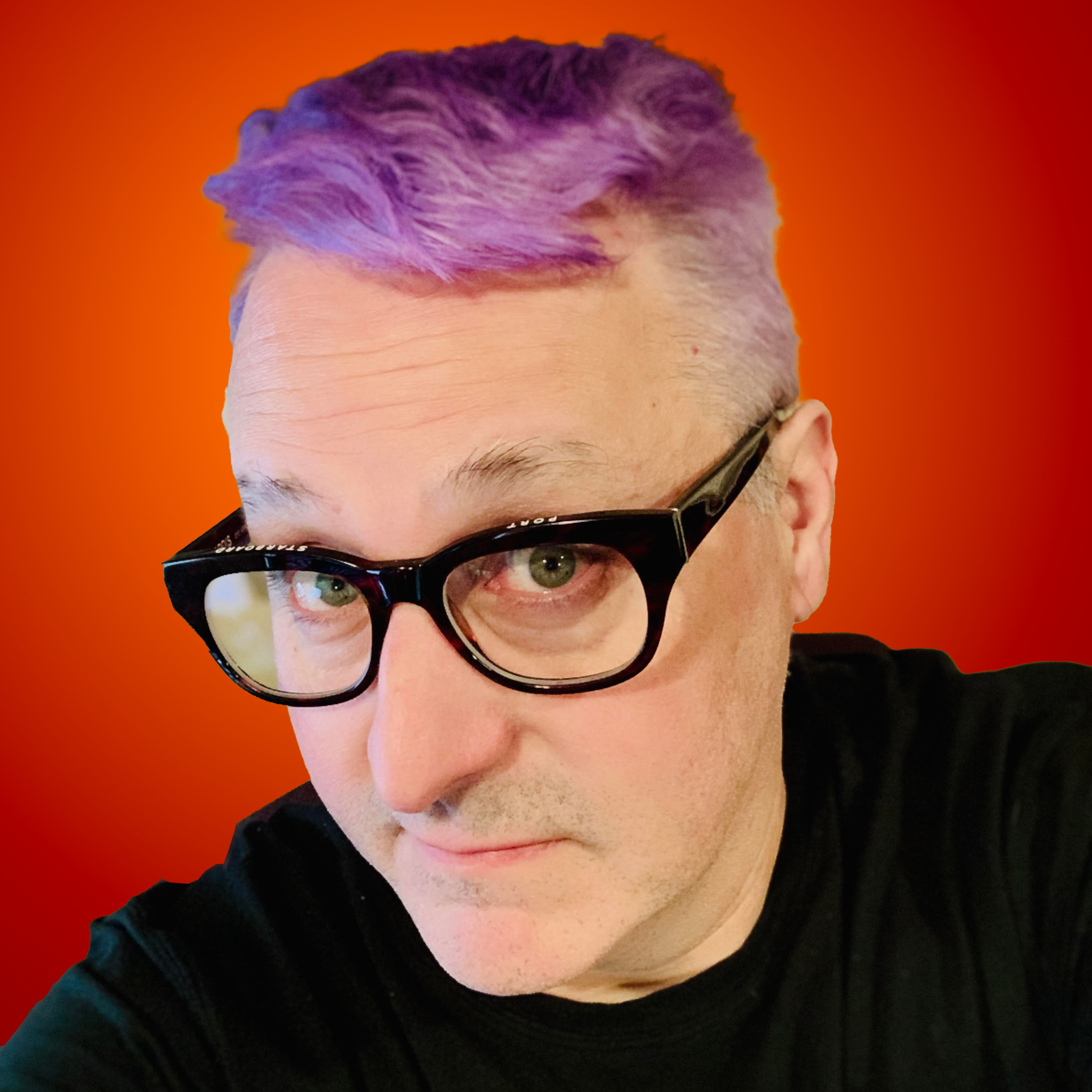
Geezers Of Gear Podcast: Legend Series - Bob Bonnio | Dining With Dinosaurs at LDI
Bob Bonniol would like to apologize for the LED wall.
He's one of the vidiots who hung pixels where your backlight used to live. In his defense, he started on your side of the console. He lied to his wife Colleen to land his first spotlight gig at Trinity Rep, and then learned to busk in Providence's legendary Living Room. in the 80's. Then came the road, Broadway, opera houses, backlots, the Olympics, and Madison Square Garden
He and Colleen Bonniol went on to build MODE Studios, where for 25 years they turned screens into scenery for Disney, Marvel, Lucasfilm and Amazon. Screens producer on American Idol and America's Got Talent, then production designer of their tours.
Along the way came Journey, Creed, 3 Doors Down, Shania Twain, Blue Man Group, Blake Shelton, LeAnn Rimes and enough New Kids on the Block to add up to one old man. He's also the guy who took that damn photograph for Nickelback. He's sorry about that one too. Despite this dubious past, he got to be part of Billy Joel's production family with Steve Cohen, design video for Hip Hop 50 at Yankee Stadium, and spend a decade in partnership with Butch Allen
He has a knack for being early to things. Concert content with Beeple, back when making video was hard. Game engines, and media servers on Don Giovanni before XR was more than two letters. Digital scenery in shows for Megan Thee Stallion and Christina Aguilera. And a couple of notable adventures in that big round room across town have been among his recent calendar entries.
These days he's Chief Innovation Officer at ACT Entertainment, running the video side of the house: Green Hippo, tvONE and Magenta. He's still sorry about the LED wall. Mostly.
Pull up a chair at his table and ask him what he told Colleen.
0:01 Welcome to another Geese of gear dining with dinosaurs at LDI Special Edition introducing Bob Boniall as one of the dinosaurs for this event. Bob is Chief Innovation Officer at ACT Entertainment and Co founder of Mode Studios where he and his wife Colleen Boniall spent 25 years turning screens into scenery for Disney, Marvel, Lucasfilm and Amazon. Starting out on the console by fibbing to Colleen for a spotlight gig at Trinity Rep and busking in Providence's living room in the 80s, Bob went on to shape American Idol, America's Got Talent Journey, Creed, Shania Twain, Blue Man Group, Billy Joel's production family with Steve Cohen, Hip Hop 50 at Yankee Stadium, and early XR and visual work with Beeple and on Don Giovanni. We're thrilled to have him here and to ask what he told Colleen. Welcome, Bob.
1:39 What is your name and tell us how you've shaped the live event industry. Well, I'm Bob Bonnie all, and I've been asked this question now, how have I shaped the live event industry? I think that maybe the best way I've shaped the industry is that that I've educated so many students at California Institute for the Arts, Colleen and I developed the master's degree program there and video for performance. And really the best thing in my life is witnessing so many of my students who have gone like so far beyond where I've gone. So maybe that's the best way that I've affected the industry. Colleen and I have also garnered a a reputation over the course of 30 years of being early to the party a little bit. So, you know, trying to invent DMX controlled media servers back in the 90s, deciding that the the early 2000s were the time the industry would know enough that content should be something they should buy, you know, right on up to, you know, figuring out how to use video to drive a bunch of light fixtures as pixels.
2:49 I think that my contribution to the industry is largely been in figuring out ways to subvert the ways that we control stuff on stage and to make bigger and bigger pictures and to have them be more and more integrated. Take us back to the beginning. What was the first tour or gig that put you on the map? Oh. When I look back to the very beginning and and how I got on the map, I always have to start with how it really began. Which me summer of 1987 in legal trouble, needing to make money because that's how one disposes of legal trouble and I needed to find a third job.
3:29 I got up early in the morning to make ice cream. I worked midday at a restaurant busing tables. But then I found out that at Trinity Repertory in Providence, RI, they needed spotlight operators. Now, all I knew about spotlights was that in the Bugs Bunny cartoons, there would be a circle that would follow Bugs Bunny around on the stage when he was playing Brunhilda. So I I was like, how hard could that be? So I went toddling down to Trinity Repertory and I presented myself at the box office. They said, step inside and talk to the electrician. I'm there in the downstairs theater. I went into the downstairs theater and I witnessed this amazing woman running a lighting crew and and I was gobsmacked by what I saw. And I somehow presented myself to her and said, I'm here for the spotlight job.
4:18 And she said, have you done this before? And I said, oh, hundreds of times lies. She said, great, I'm a little bit over the barrel. We open tomorrow. Here's the color. Go put them in your spot. So the spotlight was a satellite. It was about as simple as the spotlight gets. I went up, I visited it for about an hour, came back with the color, said I've never put color in this particular kind of spot. And the head electrician said, you have never done this before, have you? And I said, you're right. You've caught me. I haven't. I've never done this. But I've always dreamed of a career in entertainment and in theater. And this is my big break. And I want to come here and I want to learn lighting and I this is it.
4:58 So she's like, well, you really have me trapped because the show opens tomorrow, so I'm going to keep you. And she then hired me for $4.00 an hour to vacuum the grid, put grounded plugs on all the lights, clean the dimmers, fix the patch, do all the menial things. I proved to be a terrible spotlight operator, but that was how my career began, on fundamental dishonesty. And that woman, well, 15 years later, became my wife. So, because the moment I witnessed Colleen, she had just come off the road with U2. She had been out on the Joshua Tree tour. Before that she'd been on Bruce Springsteen's Born in the USA. She's the most exotic, talented human I'd ever witnessed, but she wanted nothing to do with me. But she taught me to be a great electrician and then a great designer.
5:52 So that's where it all started. And then from there it went to Broadway touring and then it went to concert touring and broadcast and, and, and all of the things. Now name drop a few of the iconic artists or massive productions you've brought to life over the years. You know, it's so antithetical. We're taught not to name drop, right? So, but I do, I have a few I'm really proud of. I was a production designer for Nickelback for the first five tours. They did 4 tours that they did and I take perverse pleasure in it because there are many people who might say that Nickelback is the world's most hated rock band. But I loved working with them and they upped the budget every year and I had an utter blast. And it's How I Met my good friend which Allen for the first time when we did Nickelback together on the The Black Horse Tour.
6:42 Let's see, I've also designed Journey. I've designed, which was by the way, like that's, that's like a childhood dream coming true. That was like, oh, if I could design a group like Journey. Got the call. Got to do the first tour with Arnold Pineda, which of course is our current singer. I inadvertently kind of became a big country designer, which is funny because if you'd asked me a while ago, I would say that I don't like country music. But I've done Shania Twain, I've done Reba McEntire, I've designed Blake Shelton for many years now. Did Diddly, and Rimes was one of the first ones that I did. So had what I call an accidental country career.
7:23 But I adore it. I love the Nashville cruise. I love those those people. They've been a great part of my life and equally inadvertently maybe become a bit of a a hip hop guy and over the years have designed for Kanye, have designed Run DMC, did hip hop 50 at Yankee Stadium where we did 10 hours of hip hop artists in a in a massive line up. Went on to do Megan the Stallion, although she is now in the very capable hands of Sooner Ruvier. So there again, kind of became an accidental hip hop careerist. And then I've got a kind of whole other category of a big name drops I can make, which is, you know, having worked on Broadway. Doug did Catch Me if You Can on Broadway. Have done a ton of work for Disney over the years, which has just been magical and amazing.
8:16 And I've also, you could say I've career ADHD because I've also gone wandering off into architectural installations and brand activations. And I guess there are more names to be dropped there, but but you know, you could Google all. That stuff. What is the ultimate highlight of your journey in live event entertainment so far? While the ultimate highlight in my journey in live entertainment so far, you know what it has to be it, it really boils down to meeting a few key people, meeting my wife in the beginning, I talked about that in my origin story and we remain together. My longest professional and personal association. Butch Allen, you know, key moment when I met him on Nickelback and we went on to do so many shows together and I could not be prouder or happier to have her, him in the room right now.
9:11 You know, the first shows that I did with Peter Morse were just utterly magical. The, the, the relationship I now have with Steve Cohen after doing so many shows with, with, with Billy Joel and with Blake Shelton, we did Reba McEntire together. I think my best moments really are the moments when I've met the, the, you know, this amazing group of friends and collaborators that I've gotten to work with over the course of my career. What is it that keeps you inspired and active in the industry right now? You know, what's keeping me inspired and and active and interested in the industry is that there is no end apparent to people wanting to get together and experience things in A room together.
10:01 And the magic of that is still as magical as the first caves with with fire light and shadows. And it's as magical as the Old Globe Theater when it was first built 400 years ago. And it's the same magic that we find in the sphere right now somewhere across town in Las Vegas. What gives me hope, what keeps me excited, what keeps me pointed, is that people still love this, and they love to be in that room where other humans are creating that magic in real time. And never before have we been blessed with so many tools and so many opportunities to do this. I can't imagine stopping anytime soon.
10:44 In three words, what does it take to survive and thrive in this business for decades? Acceptance. Humility and discipline. Why do you think an event like Dining with Dinosaurs is so important for our community? You know this question, why is an event like this so important for our community? Really the answer is held in the last word of the question, community. You know, the most important thing maybe about LDI, maybe not in the industry is that we are community. And this community is at its best when we are teaching each other and we are sharing with each other.
11:26 And when the the generations are reaching down and pulling the generations up from underneath. And when we're all collaborating and all still learning together and working together and being humans together. That's why this event and events like this are so important, because this is where we come together to do those things.